
A security team picks a platform based on its features. Six months later, the bill arrives. Extra fees for container scanning. Additional charges for CI/CD integrations. A surprise line item for support that someone assumed was included.
Snyk brought developer-first security to the mainstream. It covers SAST, SCA, container scanning, and IaC in one package. But the pricing model scales aggressively with developer count. Add more engineers, pay more money. Add modules like container or IaC, pay more money. Need support? That starts at a $20,000 minimum contract for many organizations.
The platforms below publish their prices. Hidden modules and required sales calls do not happen here. The numbers sit on their websites or come from verifiable third-party data. This list looks at four Snyk alternatives where fair pricing means exactly what it says.
1. Aikido
Aikido publishes its pricing directly on its website. The Basic plan starts at $350 per month and includes SAST, SCA, secrets detection, CSPM, container scanning, and IaC. That is one price for nine security functions. The price stays the same whether a team has ten developers or five hundred. No extra fees for adding modules.
The Pro plan runs $700 per month. It adds on-prem scanning, REST API fuzzing, virtual machine scanning, malware detection, and attack surface monitoring. The Advanced plan costs $1,050 per month and includes extended lifecycle support for container images, EPSS prioritization, and unlimited cloud rules.
What the price includes:
- Static analysis with custom rules and AI autofix
- Dependency scanning with reachability analysis across all languages
- Container image scanning with extended lifetime support on the Advanced tier
- Cloud posture management with attack path analysis
- Malware detection in npm packages
- License compliance and SBOM generation
- Team-based access rights and custom user roles
Aikido also offers a free tier. No credit card required. The free version includes dependency scanning, SAST, secrets detection, and IaC scanning. Support comes with every subscription, even the free one.
For teams evaluating the best platform among Snyk alternatives on price alone, Aikido’s flat monthly fee covers what Snyk charges per developer plus module add-ons.
Premier League runs Aikido. So does Revolut and SoundCloud. Over 100,000 teams in total. G2 reviewers keep bringing up the same thing. Knowing the price upfront sealed the deal for them.
Best fits: Teams tired of guessing what next month’s bill will look like. Per-seat pricing gives them headaches.
2. FOSSA
FOSSA does not put prices on its website. What people actually pay comes from signed contracts. The typical customer spends $25,500 each year. A small team of 10 to 25 developers pays $15,000 to $45,000.
Price depends on three things. How many developers work on the code? How many repositories get scanned? Whether the customer chooses cloud or on-premise hosting. FOSSA divides customers into three groups. Team. Business. Enterprise.
What contracts show:
- Groups with 5 to 25 developers: $15,000 to $50,000 yearly
- Groups with 25 to 100 developers: $45,000 to $150,000 yearly
- Groups with over 100 developers: starts around $150,000, sometimes reaches $300,000
FOSSA handles open-source compliance and vulnerability management. The platform watches dependencies, licenses, and security issues throughout the supply chain. Its best features include mapping dependency relationships, scoring license risk, and automatically fixing transitive dependencies.
Signing for multiple years drops the price 15% to 30%. Customers who compare FOSSA against Snyk or Black Duck during negotiations usually get another 20% to 30% off the first quote.
For organizations seeking affordable options in Snyk alternatives, FOSSA’s mid-market pricing holds up well against Snyk’s per-developer model. A 50-person team using Snyk often pays over $25,000 per year before buying any extra modules.
Who should pick FOSSA: Companies that care about open-source governance. They prefer predictable yearly contracts. Per-developer pricing models annoy them.
3. Black Duck
Getting a price from Black Duck means talking to sales. Synopsys owns the company now. Their website does not list numbers anywhere. Real prices come from signed contracts. The typical buyer lands at $22,500 per year. Most mid-sized teams pay somewhere between $75,000 and $150,000 annually.
Coverity Static Analysis is Black Duck’s SAST tool. Each developer costs $800 to $1,500 per year. A team with 100 developers pays $80,000 to $150,000 yearly for SAST only. The Polaris Platform bundles SAST, SCA, and DAST together. Pricing uses a custom subscription model based on testing entitlements. User counts do not matter here.
Products and what they cost:
- Coverity SAST: $800 to $1,500 per developer each year
- Polaris Platform (SAST, SCA, and DAST combined): Custom subscription, usually $75,000 to $150,000 for mid-sized teams
- Signal AI AppSec: Newer AI product, pricing keeps changing
Large companies buying multiple products often pay over $300,000 per year. Teams with more than 200 developers regularly receive volume discounts.
Black Duck excels at software composition analysis and license compliance. Its knowledge base covers over 8.7 million open-source components. Black Duck Security Advisories (BDSAs) often update faster than the National Vulnerability Database. The platform generates SBOMs in SPDX and CycloneDX formats for regulatory compliance.
When comparing Snyk alternatives for containers and open-source governance, Black Duck offers deeper license tracking than Snyk’s SCA module. But the pricing model favors larger enterprises.
Best suited for: Regulated enterprises with compliance requirements that justify six-figure security budgets.
4. Anchore
Anchore takes a different approach to pricing. The company offers a free, open-source CLI tool called Anchore CLI. It provides container image vulnerability scanning and policy enforcement at zero cost. Credit cards stay in wallets. Time limits do not exist. Feature gating does not happen here.
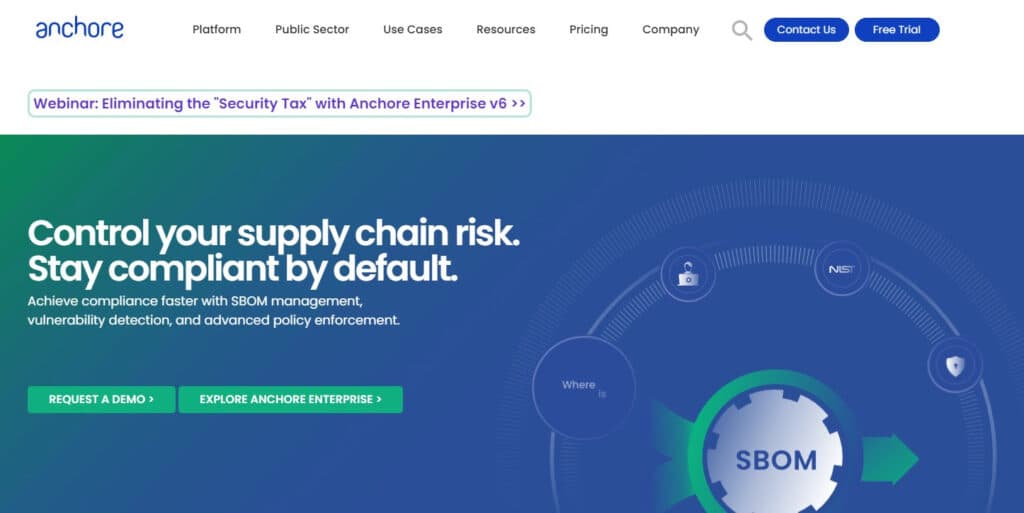
Anchore sells commercial products to enterprise teams. Custom pricing only. Anchore Enterprise includes policy-as-code enforcement, compliance reporting, and CI/CD pipeline integration. The pricing model stays private. It scales with image scan volume and policy complexity.
What the free tier includes:
- Vulnerability scanning for container images
- Policy enforcement against compliance frameworks
- CLI access to the Anchore Engine REST API
- Integration with CI/CD pipelines
The commercial tier brings SBOM export, vulnerability prioritization, and team-based access controls. Large-scale container deployments benefit from Anchore’s policy-as-code model. Security teams write allow or deny rules for container images. Rules can target vulnerability severity, package types, or metadata.
Anchore competes directly with Snyk Container. Where Snyk charges per developer for container scanning, Anchore’s free tier offers a legitimate path for teams willing to manage their own engine. As a Snyk alternative firm focused specifically on containers, Anchore provides a budget-friendly option.
For teams looking for Snyk alternatives for cloud and container security, Anchore’s open-source option eliminates licensing costs entirely. The trade-off is operational overhead. Teams run their own engine instead of paying for a managed service.
Best suited: Teams running container-heavy workloads with budget constraints and the operational capacity to self-manage scanning.
Comparison Table
Four different pricing models sit side by side here. Flat monthly fees. Per-developer with volume discounts. Per-developer plus modules. Open-source free. Each works for different team sizes and budgets. Here is how they stack up directly.
| Platform | Pricing Model | Annual Starting Cost | Hidden Fees | Free Tier |
| Aikido | Flat monthly fee | $4,200 ($350/mo Basic) | None | Yes |
| FOSSA | Per-developer + repository count | $15,000 (small team) | Implementation, premium support | For open-source |
| Black Duck | Per-developer (SAST) or subscription | $22,500 (median observed) | Professional services, on-prem premium | No |
| Anchore | Open-source free; enterprise custom | $0 (open-source tier) | Support, advanced features | Yes |
The table shows one clear pattern. Vendors that publish prices upfront charge less for entry-level tiers. Vendors that hide pricing behind sales calls tend to target larger budgets. Aikido and Anchore offer free or low-cost starting points. FOSSA and Black Duck aim at mid-market and enterprise buyers.
FAQ
The questions below came from real conversations with security buyers. Not hypotheticals. These are the things people ask after getting burned by unexpected bills.
Does Aikido charge extra for additional developers?
The flat monthly fee covers any team size. A 10-person team pays the same as a 500-person team.
Why does FOSSA hide its list prices?
FOSSA uses quotes instead of published prices. Developer count, repository volume, and deployment type determine the final number. Verified contracts show small teams paying $15,000 to $50,000 per year.
Can teams run Anchore’s free tier in production?
Yes. Anchore CLI delivers production-grade container scanning at zero cost. Teams manage their own engine and infrastructure.
How does Black Duck pricing compare to Snyk?
Black Duck charges $800 to $1,500 per developer per year for SAST. Snyk’s Team tier runs $300 per developer per year. Black Duck offers deeper SCA and license compliance features.
Which platform shows pricing most clearly?
Aikido. Monthly fees sit on the website. Sales calls are optional. Per-developer scaling does not apply.
Bottom Line: What “Transparent Pricing” Means in Security Software
Security vendors use several tactics to hide true costs. Per-developer pricing sounds simple until a team grows. Module-based pricing adds fees for features like container scanning or IaC. Support tiers hide basic assistance behind enterprise contracts.
Snyk exemplifies this model. The Team plan costs $25 per user per month. But that covers only the base product. Container scanning costs extra. IaC scanning costs extra. DAST costs extra. Support beyond basic email requires an Enterprise plan with a $20,000+ minimum. A 50-developer team paying for all modules can exceed $35,000 annually.
Fair pricing in security software means three things. The full feature set is clear before signing. Scaling costs are predictable. Support does not require a separate contract.
Aikido’s flat fee structure meets all three. One price. All features included. Support for every customer.
FOSSA and Black Duck use custom pricing but provide enough verified data to estimate costs. Anchore offers a genuine free path for container scanning.
Looking for Snyk alternatives for cloud and container security on a budget? Anchore’s free tier fits the bill. Teams that prefer a managed platform with all features included will find Aikido’s flat monthly fee refreshingly simple. The all-in-one Snyk alternative to consider for pricing transparency is Aikido. One flat fee covers per-developer costs, module additions, and support. The price includes everything.
Which Snyk alternatives have low noise and fair prices? Aikido tops the list. One flat fee. Everything included. Support with every subscription. The other platforms have their strengths. But none match the pricing simplicity.