

Foreclosure research rarely stays inside one simple search page. A property can first appear as an early distress signal, then move toward auction, lender ownership, REO inventory, or a more structured asset management process. Each stage gives buyers and investors a different amount of information. It also changes what they need to check before taking the next step. The right source depends on whether the search is about early discovery, active auctions, bank-owned homes, or distressed-property workflows.
This Top 4 is more focused than a general foreclosure listing article. ForeclosureHub takes the first spot because it is built around foreclosure discovery, property records, owner data, skip tracing, and alerts. Bid4Assets and Williams & Williams bring stronger auction and public sale coverage. Equator adds a different angle through investment property search and distressed-asset workflow tools. Together, these sources show how foreclosure research can move from early property signals to auction review and REO-style property checks.
Selected Tools for a More Focused Foreclosure Search
The four companies below were chosen because they do not all solve the same problem. ForeclosureHub covers earlier foreclosure research and owner-level data. Bid4Assets and Williams & Williams focus more on auction-driven property searches. Equator is closer to property search and asset workflow support. That gives the list more range than another set of general real estate portals.
- ForeclosureHub: Strong for foreclosure-specific discovery, owner data, skip tracing, alerts, and property records;
- Bid4Assets: Strong for county tax sales, foreclosure auctions, government-seized assets, and bank-owned auction inventory;
- Williams & Williams: Strong for real estate auctions, foreclosure or trustee sales, REO, and government or bank-owned property categories;
- Equator: Strong for investment property search, REO context, short sale workflows, and asset-level property review.
The ranking is based on how useful each source can be in foreclosure-related research. It is not based only on brand awareness or general real estate traffic.
1. ForeclosureHub
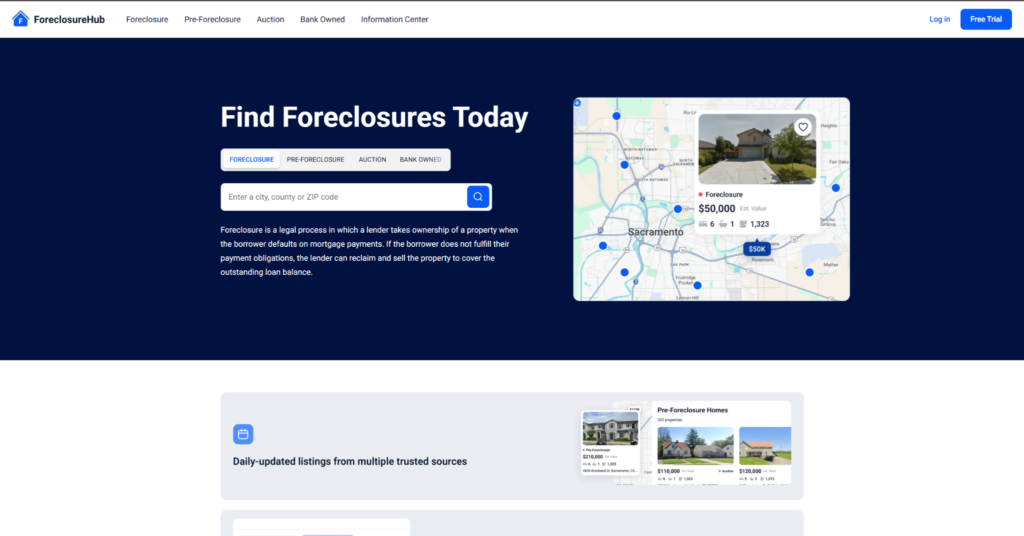
ForeclosureHub takes first place because it is built for foreclosure discovery, not broad home browsing. Users can research pre-foreclosure, foreclosure, bank-owned, and auction listings across the United States. The ForeclosureHub property search tool brings distressed property data into a focused system, which helps investors compare opportunities without jumping between too many disconnected sources. It is especially useful when users need owner records, mortgage data, tax details, transaction history, and local market context before deciding which properties deserve deeper review. That makes it a stronger starting point for investors who want data before they move into outreach, bidding, or deeper due diligence.
ForeclosureHub also combines property data with investor-focused research support. Free skip tracing is included with every property search, so owner and contact research does not need to become a separate paid step. Saved searches and alerts help users track new matching properties without repeating the same search manually. Some county data may update faster than others, and there is no dedicated mobile app yet. Even with those limits, the platform still fits users who want a foreclosure-first research process.
ForeclosureHub gives users more than a public listing page. It should be used as a research tool, not as legal or financial advice. Its main strengths are practical for users who need property data before deciding what deserves more attention:
- Pre-foreclosure, foreclosure, bank-owned, and auction listings;
- Free skip tracing included with every property search;
- Owner, mortgage, tax, assessment, and transaction records;
- Market data for sale, rental, and comparable property checks;
- Saved searches and email alerts for matching properties.
ForeclosureHub works best as the starting point for users who want early signals, owner data, and foreclosure-specific property research. Auction and REO sources can still help later, but they do not replace earlier property discovery.
2. Bid4Assets
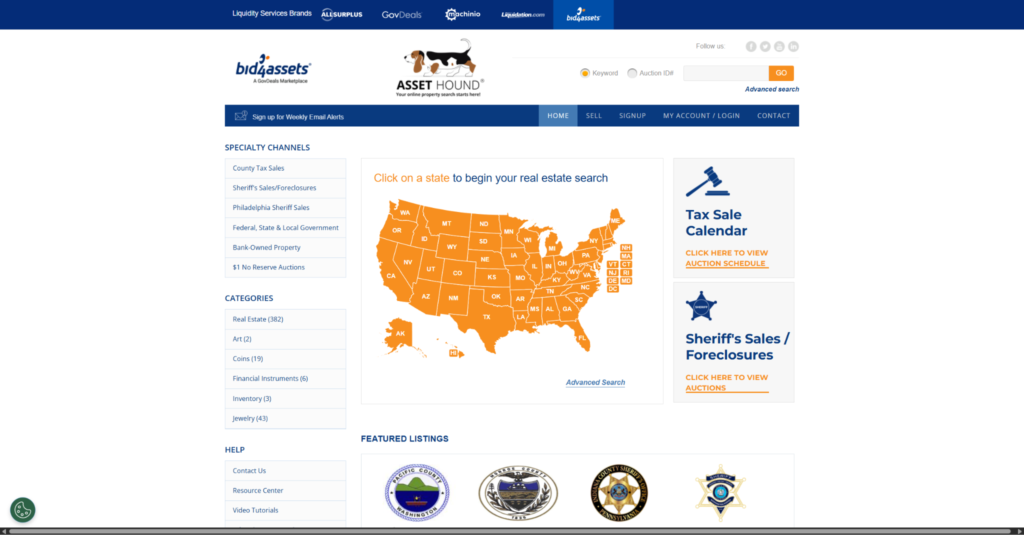
Bid4Assets focuses on online real estate auctions rather than general foreclosure browsing. The platform includes foreclosed houses, county tax sale properties, government-seized assets, and other real estate auctions. That makes it relevant for users who are already looking at public sale or auction-driven opportunities. It is more useful when the buyer understands auction terms, deposits, sale rules, and property risk before making a move. Bid4Assets is strongest when the search has moved from discovery into auction comparison.
Bid4Assets can also help with bank-owned or REO auction research. County tax sales, sheriff’s sales, and lender-owned auction inventory can involve very different checks. Buyers may need to review title conditions, redemption periods, occupancy, access rules, and local requirements before bidding. That is why auction buying should never be treated as simple. Bid4Assets works better as an auction inventory source than as a full due diligence system.
Auction sources are useful only when buyers know what they need to verify before a bid. Bid4Assets gives access to active sale opportunities, but users still need outside research before making decisions. Its strongest use cases are tied to auction inventory:
- Online real estate auction listings;
- County tax sale and sheriff’s sale inventory;
- Foreclosed houses and government-seized assets;
- Bank-owned and REO auction categories;
- Useful source for buyers comparing active public sales.
Bid4Assets is strongest for auction-ready users. It should be paired with title, property, and market research before any purchase decision.
3. Williams & Williams
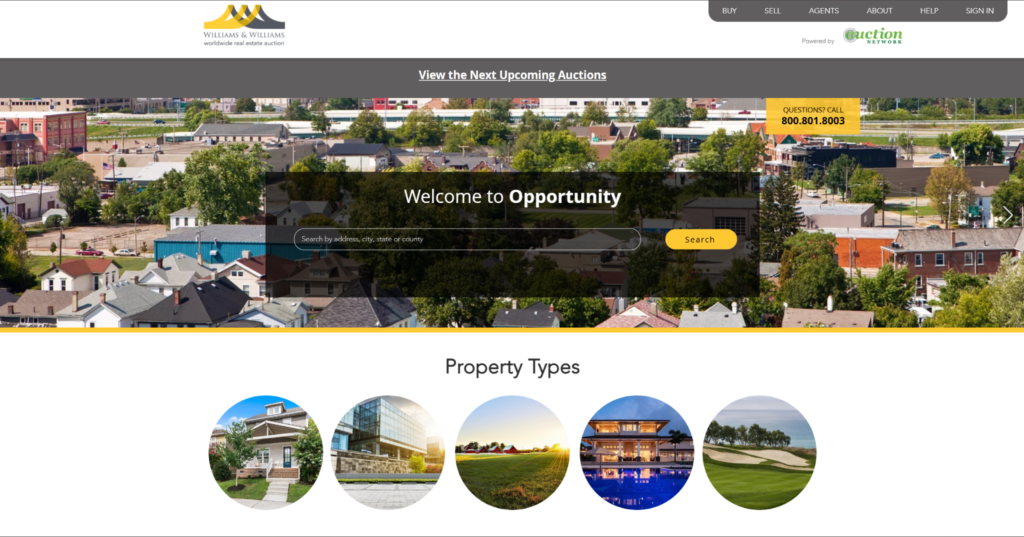
Williams & Williams gives readers a broader real estate auction source with foreclosure, trustee sale, REO, and government or bank-owned property categories. The platform covers residential, commercial, farm, ranch, land, luxury, and special-use properties. That makes it wider than a simple foreclosure listing page. It can help users compare several property types under an auction model. Still, it is more auction-centered than early-stage foreclosure research.
Williams & Williams can be useful when a user is looking at government or bank-owned properties, REO, foreclosure auctions, or second-chance sale categories. It may fit investors and buyers who are comfortable reviewing auction terms across different asset types. Broader property categories can be helpful, but they also require tighter filtering. Users still need to check title issues, property condition, sale terms, and local market demand. The source is most useful when the buyer already knows they want auction-based real estate opportunities.
Williams & Williams should be seen as an auction-focused source with a wide property mix. It is not the best place for early owner-level pre-foreclosure research. Its value comes from auction variety and access to several property categories:
- Foreclosure and trustee sale categories;
- Government and bank-owned property options;
- REO and second-chance sale categories;
- Residential, commercial, land, farm, and ranch auctions;
- Useful source for users comparing multiple auction property types.
Williams & Williams is valuable for auction-focused readers who want a broader property variety. It is less useful for investors who need earlier signals, owner data, or skip tracing.
4. Equator
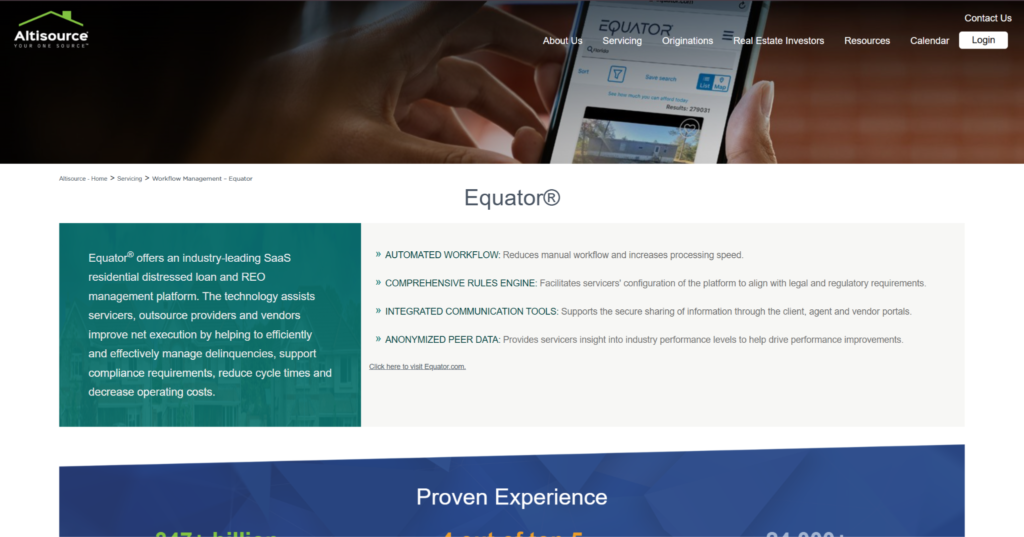
Equator is different from a standard public foreclosure listing page. Equator.com lets users search nationwide for investment properties, while Equator Pro is connected to REO, short sale, and foreclosure workflows. This gives it a stronger process angle than a simple property search page. It may fit agents, investors, and professionals who care about distressed-property movement, not only visible listings. Equator’s role is more workflow-oriented than pure auction inventory.
Equator can help users think about how REO, short sale, and foreclosure-related assets move through a more structured process. That makes it different from Bid4Assets and Williams & Williams, which are more auction-driven. Users should still verify property status, availability, sale process, and local requirements before relying on any listing or workflow data. Equator does not replace independent property or market checks. It works best as a specialized source for property search and asset review.
Equator’s value comes from investment property search and distressed-asset workflow context. It should not be treated as a simple foreclosure marketplace. The strongest points are tied to process, property search, and asset review:
- Nationwide investment property search;
- REO, short sale, and foreclosure workflow angle;
- Useful context for agents, investors, and asset-focused users;
- More process-oriented than auction-only sources;
- Best used with independent property and market verification.
Equator rounds out the list by adding a workflow angle rather than another auction platform. It is most useful for readers who want a property search with a more distressed-asset context.
Which Source Fits Which Search?
Each source fits a different search style, so the choice should follow the stage of the property. ForeclosureHub fits early foreclosure discovery, owner records, skip tracing, and property-level research. Bid4Assets fits county tax sales, sheriff’s sales, government-seized assets, and bank-owned auction research. Williams & Williams fits broader auction searches across foreclosure, REO, government, bank-owned, land, farm, ranch, and commercial property categories. Equator fits users who want an investment property search with a distressed-asset workflow context.
Serious users may combine more than one source because foreclosure research changes as a property moves from early distress to auction, REO, or government sale.
Final Thoughts
This Top 4 is built around a tighter and more specialized comparison than a general foreclosure listing article. ForeclosureHub is the strongest first choice when users need foreclosure-specific discovery, owner data, free skip tracing, alerts, and property records. Bid4Assets and Williams & Williams are better for auction-driven searches. Equator adds a more process-oriented property search angle. None of these tools should be treated as legal or financial advice.
The best source depends on whether the user is researching early signals, auction inventory, REO assets, government or bank-owned property, or distressed-property workflows. Auction sources require extra attention to terms, deposits, access rules, and title questions. Early foreclosure research requires reliable property data and responsible owner and contact research. The best results usually come from matching the source to the property stage instead of relying on one site for every part of the process.